 gamercore13
Games, in all their varied forms, have played an essential role in human culture for centuries. From ancient board games and physical sports to modern video games and digital simulations, the concept of play has evolved and adapted, shaping our societies and individual lives in countless ways. Today, games are more than just entertainment; they have become a global industry, a means of social interaction, and a platform for education and personal growth.
In this blog post, we’ll explore the fascinating world of games—how they’ve evolved, their cultural significance, the psychology behind why we play, and what the future holds for gaming.
The Origins of Games: Play as a Universal Human Trait
Games have been an integral part of human history, with evidence of play dating back to ancient civilizations. Archaeological finds reveal that even ancient Egyptians, Mesopotamians, and Greeks enjoyed board games and physical contests. The oldest known game, Senet, was played by the ancient Egyptians around 3000 BCE, a game that combined strategy and chance, reflecting a blend of entertainment and symbolic meaning.
In ancient times, games were often tied to rituals, entertainment, and educational purposes. For example, the ancient Greeks used athletic competitions like the Olympics not only as a form of physical challenge but also as a display of cultural and religious reverence. Similarly, many traditional board games were designed to teach important skills like strategy, mathematics, and social interaction.
The one constant throughout history has been the universal appeal of play. Regardless of culture or time period, games have always been a way to connect with others, challenge ourselves, and experience joy and excitement.
The Evolution of Games: From Board Games to Video Games
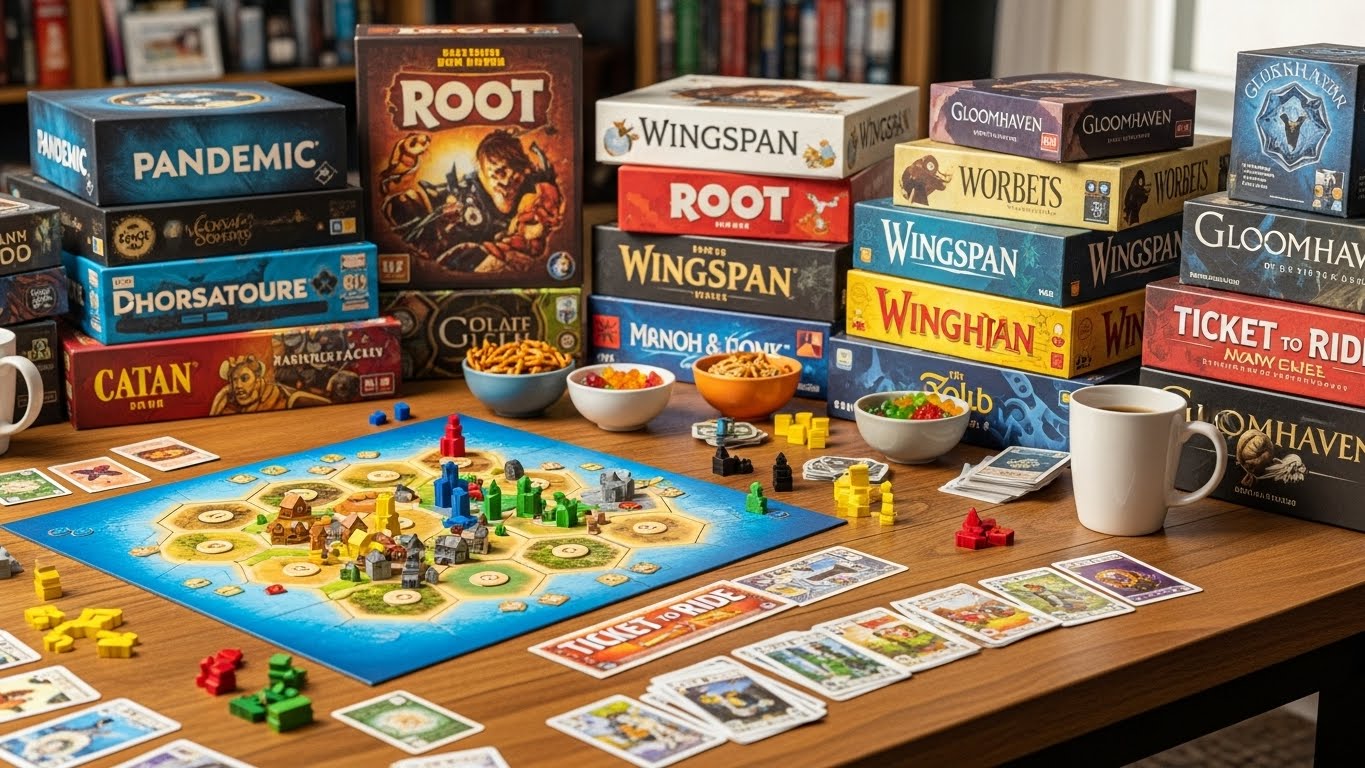
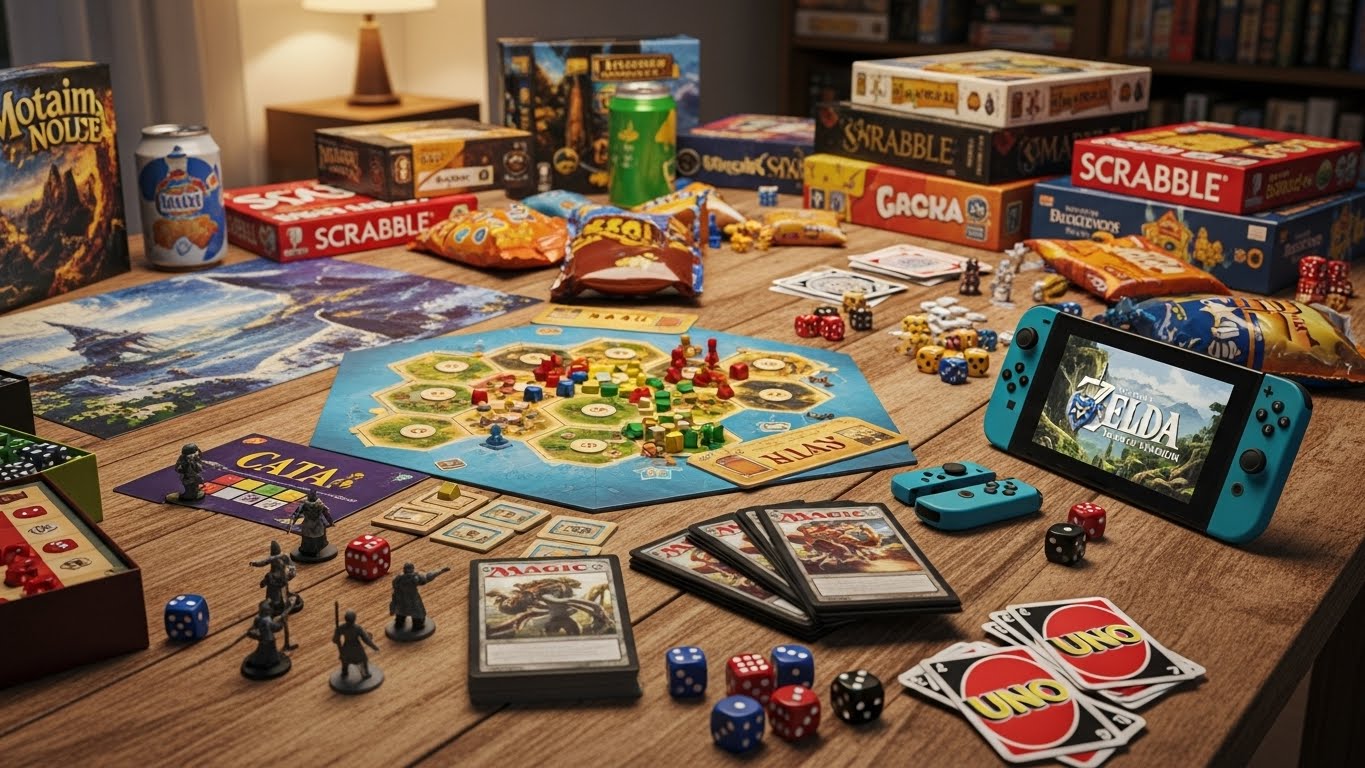
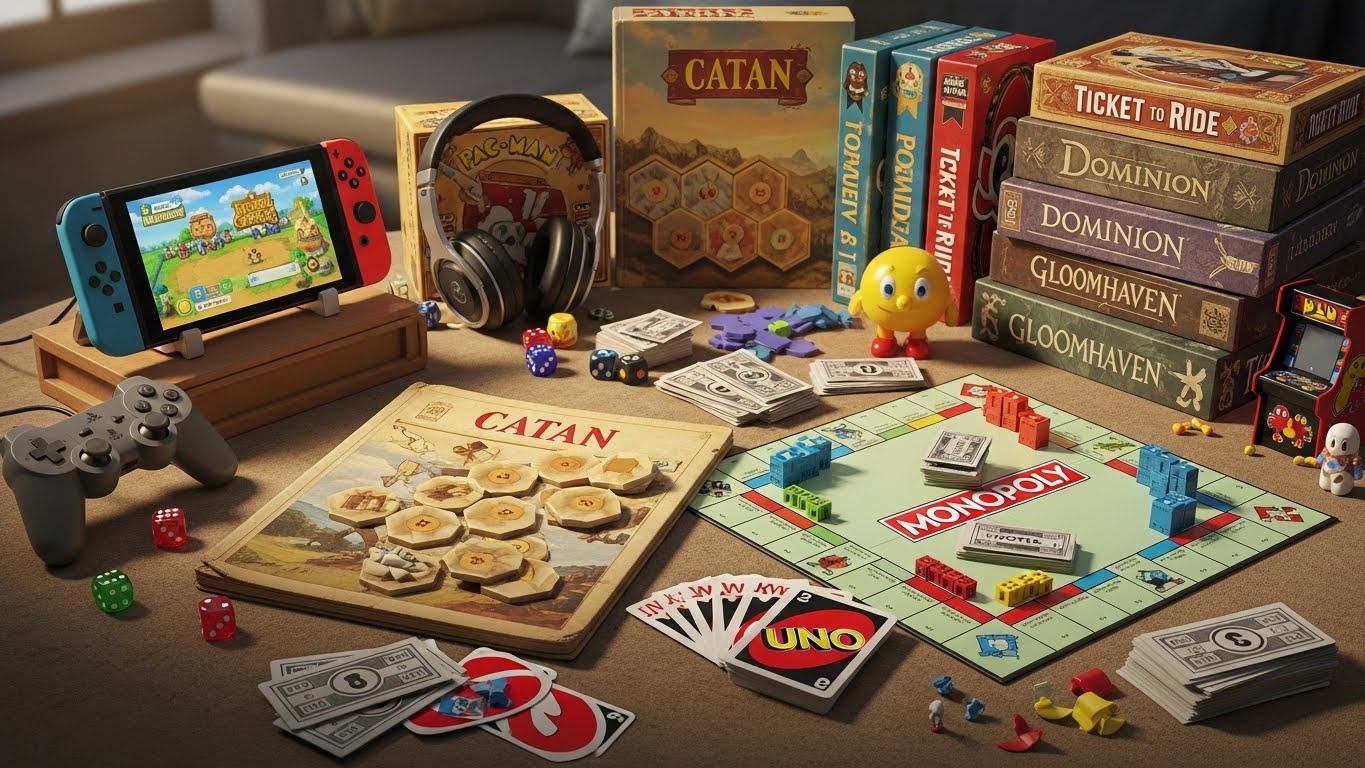
As societies progressed and technology advanced, the nature of games began to shift. The development of modern board games in the 18th and 19th centuries laid the groundwork for a new era of entertainment. Classic games like Chess, Monopoly, and Scrabble became staples in households around the world, offering players a chance to engage in friendly competition or bond with family and friends.
However, it wasn’t until the mid-20th century that gaming began to take on a new form with the advent of electronic and video games. In the 1950s and 1960s, early computer-based games were developed, such as Tennis for Two and Spacewar!—the precursors to the modern video games we know today. The 1970s saw the first arcade games, like Pong and Asteroids, which made gaming a popular pastime for a wider audience.
The 1980s marked the golden age of video games, with the introduction of home consoles like the Atari 2600 and the Nintendo Entertainment System (NES). These consoles made gaming accessible to people in their homes, and games like Super Mario Bros., Pac-Man, and Donkey Kong became cultural phenomena. The rise of video games also coincided with the development of more advanced graphic technologies, allowing for increasingly immersive and complex gaming experiences.
By the 1990s and 2000s, the gaming industry had transformed into a multi-billion-dollar sector, with the emergence of personal computers, high-end gaming consoles like PlayStation and Xbox, and the expansion of online multiplayer games. Video games became a major form of entertainment, rivaling other media industries like film and television in both revenue and cultural impact.
The Psychology of Gaming: Why We Play
So, why do we play games? What is it about games that make them so universally appealing, regardless of age, culture, or background? The psychology behind gaming is multifaceted, and several theories help explain our inherent desire to engage in play.
1. The Desire for Achievement and Mastery
One of the core motivations behind gaming is the pursuit of achievement. Games often present players with challenges that require skill, strategy, and perseverance to overcome. Whether it’s solving a puzzle, defeating a powerful enemy, or building a successful empire, players find satisfaction in mastering these challenges. This sense of achievement is often rewarded with in-game progression, new levels, and unlockable content, which fuels the desire to keep playing.
The concept of flow, coined by psychologist Mihaly Csikszentmihalyi, is also relevant here. Flow is a state of deep concentration and immersion in an activity that is both challenging and rewarding. Many video games are designed to induce this state, where players feel fully engaged in the game and experience a sense of time loss and satisfaction.
2. Escapism and Fantasy
Another reason people play games is for escapism. Games provide an opportunity to immerse oneself in a world that is different from everyday life. In video games, players can become heroes, adventurers, or even villains, experiencing lives and scenarios they could never encounter in the real world. Role-playing games (RPGs) like The Elder Scrolls or World of Warcraft allow players to explore vast, imaginative universes and live out their fantasies.
For many, games offer a safe and controlled environment where they can escape from the stresses of daily life, offering both relaxation and excitement in equal measure.
3. Social Interaction and Competition
Games are not only an individual pursuit; they are also deeply social. Multiplayer games, whether online or in person, have become a major aspect of the gaming landscape. Games like Fortnite, League of Legends, and Call of Duty allow players to connect with friends or strangers from around the world, building communities around shared interests.
The social aspects of gaming provide a platform for cooperation and competition, where players can collaborate to achieve common goals or compete for supremacy. Online leaderboards, tournaments, and multiplayer modes keep players engaged and motivated to improve their skills, while also fostering a sense of camaraderie among teammates or friendly rivalry between opponents.
The Cultural Significance of Games
Games have transcended the realm of mere entertainment and have become deeply embedded in cultural and social life. Video games, in particular, have influenced other forms of media, including film, television, and music. Iconic characters like Mario, Link, and Master Chief have become household names, appearing in merchandise, comic books, and even feature films.
Gaming has also become a form of storytelling. Many modern games feature intricate narratives that rival those of novels or films, allowing players to become part of the story. Games like The Last of Us, Red Dead Redemption 2, and The Witcher 3 have received critical acclaim not only for their gameplay but also for their compelling characters and emotionally charged storylines. As the gaming industry matures, more and more developers are prioritizing storytelling, making games an art form in their own right.
Moreover, the rise of esports has given competitive gaming its own subculture, with professional players and teams earning sponsorships, media attention, and substantial earnings. Esports events, like The International (Dota 2) and League of Legends Worlds, attract millions of viewers worldwide, positioning gaming as a mainstream sport and entertainment experience.
The Future of Gaming: Trends and Innovations
The future of gaming is incredibly exciting, with several emerging trends that are set to shape the next generation of gaming experiences.
1. Virtual Reality (VR) and Augmented Reality (AR)
Virtual reality and augmented reality are rapidly becoming part of the gaming landscape. VR gaming allows players to immerse themselves fully in digital worlds, experiencing games in ways that were previously unimaginable. With advancements in VR technology, games like Half-Life: Alyx and Beat Saber are pushing the boundaries of interactive entertainment, offering players a truly immersive experience.
Augmented reality, as seen in games like Pokémon GO, blends the virtual and physical worlds, allowing players to interact with digital content overlaid on the real world. As VR and AR technologies improve, we can expect even more innovative gaming experiences that bridge the gap between the digital and physical realms.
2. Cloud Gaming and Streaming
Cloud gaming services like Google Stadia, Xbox Cloud Gaming, and NVIDIA GeForce Now are revolutionizing the way we play games. These platforms allow players to stream high-quality games directly to their devices, eliminating the need for expensive hardware like gaming PCs or consoles. Cloud gaming has the potential to make gaming more accessible to a broader audience, as long as users have a stable internet connection.
3. Artificial Intelligence (AI) and Procedural Generation
Artificial intelligence is being increasingly used to enhance the gameplay experience. From more sophisticated NPC (non-playable character) behavior to adaptive difficulty levels, AI is helping to create more dynamic and responsive games. Procedural generation, a technique that uses algorithms to create content like maps, levels, and environments, is also becoming more common in games like Minecraft and No Man’s Sky, providing players with endless possibilities and replayability.
Conclusion: The Enduring Power of Games
Games have come a long way from their humble origins, evolving from simple pastimes to complex, immersive experiences that entertain, challenge, and connect people worldwide. Whether through the pursuit of achievement, escapism, or social interaction, games continue to captivate millions, providing a rich and dynamic form of entertainment that transcends cultures and generations.
As technology continues to advance and new innovations emerge, the future of gaming is brighter than ever. From virtual reality to cloud gaming, the next generation of games promises to be more immersive, accessible, and diverse than anything we’ve seen before. Games will undoubtedly remain a central part of our lives, influencing how we learn, interact, and experience the world around us.