 gamercore13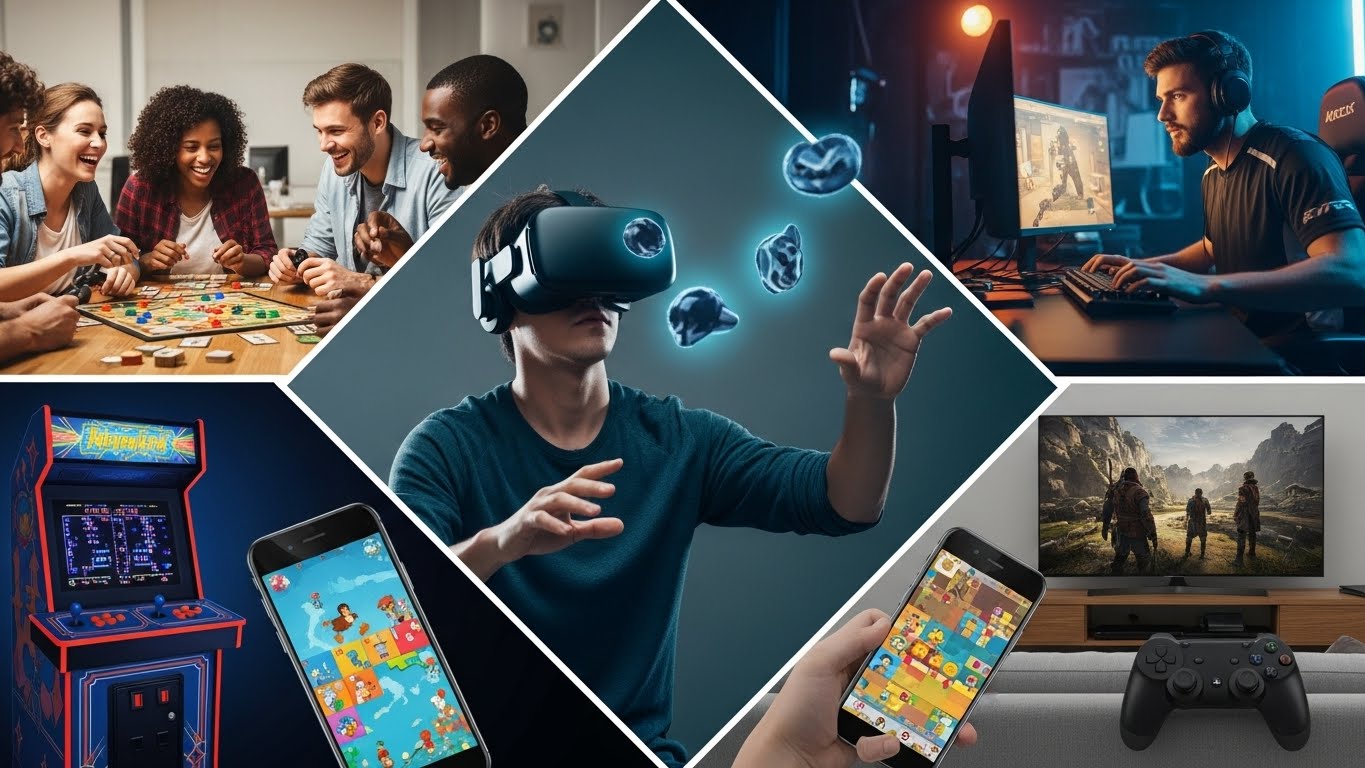
Gaming has evolved from humble beginnings in arcade rooms to a multi-billion-dollar industry that dominates entertainment globally. What started as simple games like Pong and Space Invaders has grown into an entire culture, with stunning graphics, immersive storytelling, and global communities built around play. As technology has advanced, so too has the gaming experience, transforming from single-player experiences to multiplayer worlds that span across continents. In this blog, we will explore the fascinating journey of video games, from their early days to their current status as cultural phenomena, and look ahead at the future of gaming in a rapidly changing world.
The Humble Beginnings: Arcade Games and the Birth of Gaming Culture
The 1970s marked the birth of video games as we know them today. In 1972, Atari released Pong, the first commercially successful arcade game, which allowed two players to control paddles and try to bounce a ball past each other, essentially a digital version of table tennis. It was simple, but it was addictive, and it marked the beginning of what would become a global industry.
Throughout the 1970s and early 1980s, arcade gaming exploded in popularity. Classic titles like Space Invaders, Pac-Man, and Donkey Kong became household names. People flocked to arcades, dropping quarters into machines for the chance to compete for high scores. These early arcade games, with their pixelated graphics and straightforward mechanics, laid the foundation for a cultural shift. Gaming wasn’t just about playing—it was about sharing experiences with others. Friendly competition, bragging rights, and the joy of completing high-score challenges became central to the gaming experience.
In parallel with the arcade boom, the first home consoles appeared, allowing people to bring games into their own living rooms. The Atari 2600, released in 1977, was the first widely successful home gaming console, allowing players to enjoy games like Asteroids and Space Invaders at home. The home console revolution would go on to become one of the most significant changes in the history of gaming, setting the stage for future developments.
The Rise of 3D Graphics and Console Wars
As gaming technology advanced, so did the graphics and gameplay experiences. The 1990s saw the introduction of 3D graphics, a significant leap forward that allowed for more immersive, expansive game worlds. This era also marked the beginning of the console wars—competition between Sony’s PlayStation, Microsoft’s Xbox, and Nintendo’s GameCube—each vying for dominance in the market.
The release of the Sony PlayStation in 1994 and the Nintendo 64 in 1996 introduced players to fully 3D environments, allowing for a new level of interactivity. Games like Super Mario 64 and The Legend of Zelda: Ocarina of Time redefined the gaming experience, offering expansive open worlds, deep narratives, and highly polished gameplay. These titles showcased the potential of 3D graphics, with richly detailed environments and complex character models that made players feel as though they were truly stepping into another world.
Around the same time, Microsoft entered the gaming scene with its Xbox console in 2001, introducing the world to Halo, which became a flagship title for the system. The early 2000s also saw the launch of online multiplayer gaming, with the introduction of Xbox Live, allowing players to connect with each other across the globe in real-time. This innovation would go on to change the landscape of gaming, making it a truly global and interconnected experience.
With the advent of 3D graphics and the rise of console competition, gaming entered a new era where both the technology and the gaming culture itself began to shift dramatically.
The Age of Online Gaming and the Birth of eSports
By the early 2000s, gaming had expanded from a solitary experience to a global social activity. The introduction of broadband internet enabled players to connect and compete with each other online, transcending the limitations of local multiplayer modes. Games like World of Warcraft, Counter-Strike, and World of Warships became hugely popular, providing players with persistent online worlds that could be accessed at any time.
The rise of online gaming was a game-changer. Players could now form teams, compete in tournaments, and interact with millions of other gamers worldwide. The concept of eSports emerged, and competitive gaming quickly became a global phenomenon. Professional players, teams, and organizations began to rise to fame, competing in large tournaments with prize pools worth millions of dollars.
One of the most notable eSports games is League of Legends, which has seen some of the largest international tournaments in the gaming world. eSports, which began as a niche hobby, now draws millions of viewers on platforms like Twitch, YouTube, and Facebook Gaming. Major companies and sponsors now invest heavily in gaming events, and many universities offer scholarships for eSports athletes. Today, eSports competitions rival traditional sports in terms of viewership, with the League of Legends World Championship drawing more viewers than the Super Bowl in certain years.
The Mobile Gaming Revolution: Gaming Anywhere, Anytime
In the 2010s, the advent of smartphones and tablets created a new platform for gaming: mobile. With millions of people carrying powerful devices in their pockets, mobile gaming has quickly become one of the largest sectors of the gaming industry. Titles like Candy Crush Saga, Clash of Clans, and Pokémon GO have become household names, and mobile games now make up a substantial portion of global gaming revenue.
Mobile gaming has brought the experience to an entirely new audience. No longer confined to consoles or PCs, gaming became accessible to anyone with a smartphone. Casual gaming, once considered a subgenre, is now a massive industry. Games are now played by people of all ages, and their accessibility has broken down the barriers that once made gaming a hobby for a specific demographic.
Furthermore, mobile gaming has introduced new ways to play. With touch controls, augmented reality (AR), and the ability to play while on the go, mobile games provide a unique experience. For example, Pokémon GO combined mobile gaming with AR to create a treasure hunt that encouraged players to get outside and explore their surroundings. The success of mobile gaming has also pushed developers to create innovative monetization strategies, such as microtransactions, in-game purchases, and freemium models, changing the way games are funded and consumed.
The Virtual Reality and Augmented Reality Revolution
Looking ahead, one of the most exciting developments in the world of gaming is the rise of virtual reality (VR) and augmented reality (AR). While these technologies have been around for some time, recent advancements in hardware and software are making them more accessible and affordable for consumers.
Virtual reality, which immerses players in fully digital worlds using a VR headset, is poised to transform gaming. Games like Half-Life: Alyx have demonstrated the potential of VR, offering players an immersive experience where they can physically move through the world, interact with objects, and feel fully immersed in the action. This level of immersion is something that traditional gaming consoles and PCs can’t replicate, and it promises to change the way we play games forever.
Similarly, augmented reality enhances the real world by overlaying digital elements onto physical environments. Pokémon GO was one of the first games to bring AR to the mainstream, but the potential for AR gaming goes far beyond just catching virtual creatures. Imagine exploring a city while playing an AR scavenger hunt or experiencing an interactive story that blends the real world with virtual elements.
Both VR and AR offer exciting possibilities for the future of gaming, and as the technology continues to improve, the lines between reality and virtual worlds will become even more blurred.
The Future of Games: AI, Cloud Gaming, and Beyond
As we move further into the 21st century, the gaming industry shows no signs of slowing down. AI, cloud gaming, and new forms of social interaction are set to shape the next generation of games.
Artificial intelligence (AI) is already being used in gaming to create more dynamic and responsive environments. In the future, AI could lead to more intelligent NPCs (non-player characters) that adapt to players’ actions, creating a more organic and personalized gaming experience. Imagine a game where the storyline adjusts based on your decisions, and the world around you evolves in real-time as you interact with it.
Cloud gaming, which allows players to stream games directly to their devices without the need for powerful hardware, is also on the rise. Services like Google Stadia, Microsoft’s Xbox Cloud Gaming, and NVIDIA’s GeForce Now offer gamers the ability to play high-quality titles without the need for an expensive gaming PC or console. This technology is making gaming more accessible to a broader audience and could potentially eliminate the need for physical consoles in the future.
Moreover, new technologies like 5G and improved internet connectivity will enable seamless online multiplayer experiences with minimal lag, allowing for more immersive, real-time gameplay. Virtual reality and augmented reality could also become mainstream, further blurring the lines between gaming and reality.
Conclusion: Gaming as a Cultural Force
Gaming has come a long way since the days of Pong and Space Invaders. Today, it is a global industry, a cultural phenomenon, and a source of entertainment, competition, and social connection for millions of people. The evolution of games, from 2D pixels to fully immersive virtual worlds, has been nothing short of extraordinary. As technology continues to advance, gaming will continue to evolve, offering even more exciting experiences and opportunities.
The future of gaming is limitless. From VR and AR to AI and cloud gaming, the possibilities are endless. What was once considered a niche hobby is now a central part of modern culture, and as new technologies emerge