 gamercore13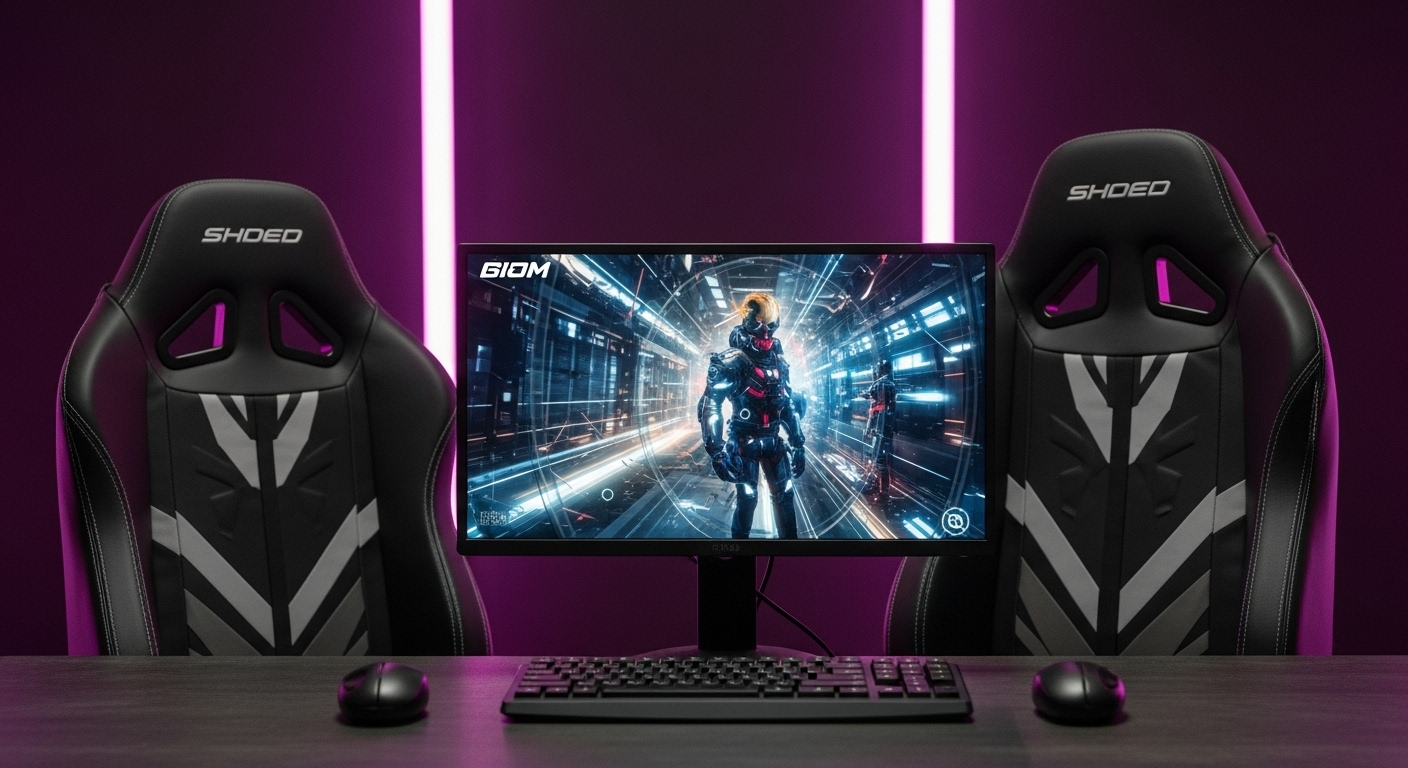
The gaming industry has come a long way since its humble beginnings. What started as simple, pixelated experiences in arcades has now evolved into a multi-billion-dollar global entertainment phenomenon that spans across platforms, genres, and demographics. With cutting-edge graphics, immersive narratives, and a vast array of experiences, gaming has become an integral part of modern culture. In this blog post, we will explore the evolution of gaming, from its origins in the 1950s to its current status as a global cultural and economic powerhouse. We will also look ahead to what the future holds for the gaming industry, examining the technological advances that promise to redefine gaming experiences in the coming years.
The Early Days: The Birth of Video Games
The 1950s and 1960s: The Dawn of Interactive Entertainment
While video games are often associated with the 1970s, their roots actually trace back to the 1950s and 1960s. Early experiments with computer graphics and interactive entertainment began in research labs, where scientists and engineers experimented with rudimentary simulations. One of the first notable instances was William Higinbotham’s creation of “Tennis for Two” in 1958, which was displayed on an oscilloscope screen and allowed two players to simulate a tennis match.
In 1961, Spacewar!, one of the first true video games, was created by Steve Russell and his team at MIT. This two-player game involved controlling spaceships while avoiding missiles, and it quickly spread across university campuses, sparking interest in interactive entertainment.
However, it wasn’t until the early 1970s that video games started becoming accessible to the public. Pong, created by Nolan Bushnell in 1972, was one of the first commercially successful video games. It was a simple two-player tennis simulation, but its success led to the establishment of arcades and the birth of the video game industry.
The Rise of Arcades and Home Consoles
The 1970s marked a pivotal moment in the history of gaming, as arcade machines became a staple of entertainment. Atari was at the forefront of this revolution, releasing Pong as an arcade machine that allowed players to compete for high scores. Pong became an instant sensation and marked the beginning of the arcade gaming culture. The late 1970s also saw the introduction of Space Invaders, Asteroids, and Pac-Man, all of which became major hits in arcades worldwide.
The popularity of arcade games in the 1970s spurred the development of home consoles. In 1977, Atari released the Atari 2600, which became one of the first widely successful home gaming consoles. The Atari 2600 allowed players to buy cartridges for different games, introducing the concept of game libraries and a vast variety of gameplay experiences within the confines of the home. Classic titles like Adventure and Space Invaders helped define the early home console gaming experience.
The 1980s: The Golden Age of Gaming
The Video Game Crash of 1983
While the early 1980s were a period of rapid growth for the gaming industry, things took a sharp downturn in 1983. The market became oversaturated with low-quality games and untrustworthy hardware. This glut of poorly made games, along with the collapse of a number of video game companies, led to the infamous video game crash of 1983. The crash resulted in a dramatic decline in video game sales and sent many developers and manufacturers into bankruptcy.
One of the most notorious examples of the crash was the release of E.T. the Extra-Terrestrial for the Atari 2600. The game, which was rushed to market to coincide with the film’s release, was widely regarded as a poor-quality product. Atari produced millions of cartridges, but consumers quickly realized the game was disappointing. As a result, Atari was left with a massive inventory of unsold cartridges, contributing to the crash.
The Revival: The Nintendo Entertainment System (NES)
In 1985, Nintendo entered the market with the Nintendo Entertainment System (NES), a console that would forever change the landscape of gaming. The NES was designed to appeal to both casual and dedicated gamers, and its first-party games, including Super Mario Bros., The Legend of Zelda, and Metroid, helped elevate the medium to new heights. These games introduced innovative gameplay mechanics, engaging stories, and vibrant worlds that players could explore for hours.
Nintendo’s success with the NES helped the industry recover from the crash, and it established Nintendo as a dominant force in the gaming market. The company’s ability to produce high-quality games, along with its innovative hardware design, allowed the NES to outsell competitors like the Sega Master System, marking the beginning of a rivalry that would define the industry for years to come.
The 1990s: The Transition to 3D Graphics and the Rise of New Consoles
The PlayStation and the Birth of 3D Gaming
The 1990s saw the advent of 3D graphics, a technological leap that would forever change how video games were designed. The introduction of the Sony PlayStation in 1994 marked the beginning of a new era for the industry. Unlike its competitors, Sony focused on creating a powerful, CD-based system that would allow for richer, more complex games with full-motion video and 3D environments.
The PlayStation became an instant hit, and games like Final Fantasy VII, Metal Gear Solid, and Gran Turismo helped define the console’s legacy. The PlayStation’s powerful hardware allowed for vast 3D worlds and introduced a new level of immersion that was impossible with the 2D graphics of previous consoles. These games also featured cinematic storytelling and advanced AI, creating experiences that rivaled traditional forms of media.
The Nintendo 64 and Sega Dreamcast
During the same period, Nintendo released the Nintendo 64 in 1996. The N64 marked the company’s entry into the world of 3D gaming, with groundbreaking titles like Super Mario 64, The Legend of Zelda: Ocarina of Time, and GoldenEye 007. The N64’s revolutionary analog controller allowed for precise movement in 3D environments, making it one of the most influential consoles in gaming history.
Meanwhile, Sega attempted to regain its position in the market with the Sega Dreamcast, which was released in 1999. The Dreamcast featured impressive graphics and online capabilities, making it ahead of its time. While the Dreamcast gained a cult following and produced standout titles like Shenmue and Jet Set Radio, it ultimately failed to compete with the PlayStation 2, which was released by Sony in 2000.
The 2000s: Online Gaming and the Rise of Modern Consoles
The Rise of Online Multiplayer and Broadband Gaming
The 2000s marked the rise of online multiplayer gaming, as broadband internet connections became more common in homes around the world. Xbox Live, launched by Microsoft in 2002, revolutionized console gaming by allowing players to connect with each other over the internet. Games like Halo 2 became huge hits thanks to their online multiplayer modes, and World of Warcraft, a massively multiplayer online role-playing game (MMORPG), became a cultural phenomenon with millions of subscribers worldwide.
Online gaming also led to the rise of esports, where professional players and teams competed in tournaments for cash prizes and sponsorships. The growth of esports has transformed gaming from a casual hobby into a competitive sport with a global following.
The Introduction of the PlayStation 3, Xbox 360, and Wii
In 2005 and 2006, Microsoft and Sony released the Xbox 360 and PlayStation 3, respectively, both of which introduced high-definition graphics and new features like digital downloads, media streaming, and enhanced online services. The Xbox 360 quickly became known for its robust online gaming ecosystem, while the PlayStation 3 pushed the envelope in terms of processing power and multimedia capabilities.
Meanwhile, Nintendo took a different approach with the Wii, which introduced motion-sensing controls that allowed players to physically interact with games. The Wii’s accessibility and affordability made it a hit with casual gamers, and titles like Wii Sports and Super Mario Galaxy helped broaden the appeal of video games beyond traditional audiences.
The 2010s and Beyond: Expanding the Horizon of Gaming
The PlayStation 4, Xbox One, and PC Gaming
The 2010s saw the rise of 4K gaming, virtual reality (VR), and a new wave of open-world games. The PlayStation 4 and Xbox One, released in 2013, provided gamers with more powerful hardware than ever before, supporting ultra-high-definition resolutions, faster load times, and stunning visual effects. Games like The Last of Us Part II, Red Dead Redemption 2, and God of War showcased the potential of modern consoles, blending cinematic storytelling with breathtaking gameplay.
At the same time, PC gaming continued to thrive, with custom-built machines offering unparalleled graphical fidelity and performance. The rise of platforms like Steam also allowed indie developers to reach a global audience, leading to the success of indie games like Hollow Knight, Undertale, and Celeste.
The Growth of Mobile and Cloud Gaming
Alongside traditional console and PC gaming, mobile gaming became increasingly popular, thanks to the ubiquity of smartphones and tablets. Games like Candy Crush, Clash of Clans, and Fortnite on mobile platforms reached hundreds of millions of players around the world, making gaming more accessible than ever before.
Cloud gaming also began to make waves with services like Google Stadia, Nvidia GeForce Now, and Xbox Cloud Gaming allowing players to stream games directly to their devices without needing high-end hardware. Cloud gaming holds the potential to democratize gaming, allowing players to access cutting-edge titles without expensive gaming PCs or consoles.
The Future of Gaming: What’s Next?
Artificial Intelligence, Virtual Reality, and Beyond
The future of gaming promises to be just as revolutionary as its past. Artificial intelligence (AI) will continue to play an increasingly important role in creating more dynamic, responsive, and intelligent game worlds. AI-driven characters and systems will allow for more complex, emergent gameplay, where no two gaming experiences are the same.
Virtual reality (VR) and augmented reality (AR) are also expected to play a major role in the future of gaming. As VR headsets become more affordable and advanced, players will be able to immerse themselves in entirely new worlds, interacting with virtual environments in ways never before possible.
Cloud gaming will continue to evolve, offering players the ability to stream games at higher resolutions and with less latency, further eroding the barriers between gaming platforms and making it easier for people to play together, regardless of their hardware.
Gaming as a Cultural Phenomenon
Finally, gaming’s role as a cultural force will continue to grow. Video games are no longer just entertainment—they have become a form of art, storytelling, and social interaction. The boundaries between traditional media like film and literature and gaming are blurring, and we are seeing more complex, thought-provoking narratives emerge in games. The world of gaming is becoming a vibrant, inclusive space where players can connect, collaborate, and share experiences in ways that transcend the digital divide.
Conclusion
The gaming industry has experienced an extraordinary evolution, from its humble beginnings in the 1950s to its current status as a global cultural and economic force. As technology continues to advance, the future of gaming holds exciting possibilities, from cloud gaming and VR to AI-driven worlds and new forms of social gaming. Whatever the future holds, one thing is clear: gaming is no longer just a pastime; it has become a fundamental part of our culture, shaping the way we interact, experience, and create.