 gamercore13
Games have always been a part of human history. From ancient board games played on stones to modern virtual realities powered by advanced technology, games have continuously evolved while keeping one thing constant—the joy of play. They have connected generations, inspired creativity, built communities, and shaped cultures. In today’s world, games are more than just a source of entertainment; they are a language of art, strategy, technology, and human connection. This blog explores the vast world of games, their evolution, cultural impact, psychological effects, and how they continue to shape the way we live, learn, and interact.
The Origins of Gaming: From Stones to Strategy
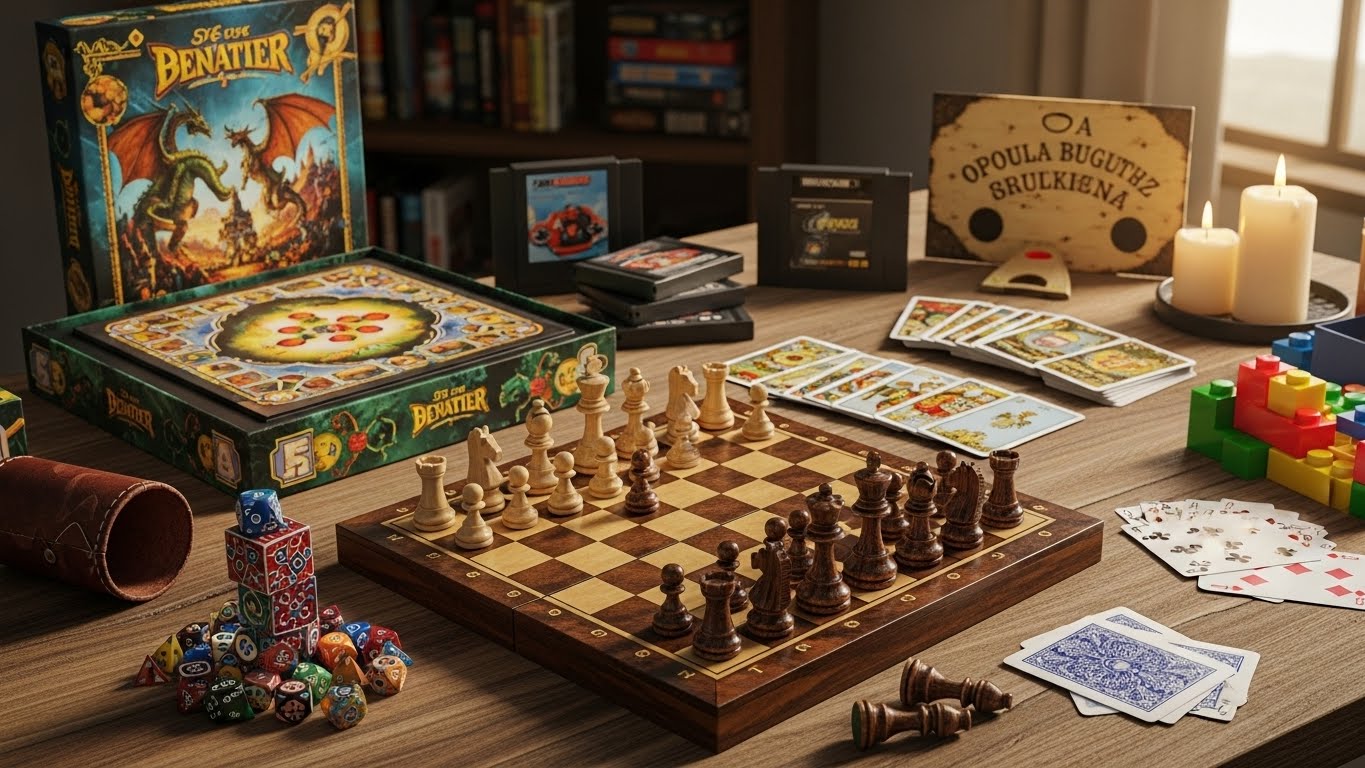
The story of games begins thousands of years ago, long before computers or even writing systems. Archaeologists have found ancient game boards carved from stone, showing that humans have always sought ways to challenge their minds and enjoy friendly competition. One of the oldest known games is Senet, played in ancient Egypt around 3100 BCE. It was not only a game but also believed to have spiritual significance, representing the journey to the afterlife.
Another early game, Go, originated in China over 2,500 years ago and remains one of the most complex board games in existence. Its beauty lies in simplicity: placing black and white stones on a grid to control territory. Yet, beneath its simple rules lies a deep strategic complexity that even modern artificial intelligence struggled to master for decades. Similarly, games like Chess, which developed in India as Chaturanga, represent the human fascination with war, logic, and foresight.
These early games show that playing was not merely for fun—it was a way to train the mind, simulate life’s challenges, and bond socially.
The Rise of Physical and Social Games
As societies evolved, so did their games. The ancient Greeks and Romans introduced sports as organized forms of competition. Games like wrestling, running, and chariot racing became vital aspects of social gatherings, festivals, and even religious ceremonies. These games tested not only physical strength but also discipline, endurance, and honor.
Meanwhile, in other cultures, games like Mahjong in China, Mancala in Africa, and Pachisi in India reflected local traditions and values. They were passed down through generations and served as a means of bringing families together. In medieval Europe, tournaments and board games became forms of both entertainment and status. Playing chess or cards was often associated with nobility and intellect, while outdoor games symbolized courage and teamwork.
Even without modern technology, games already reflected key aspects of human life—strategy, cooperation, and creativity.
The Dawn of Digital Gaming
The 20th century marked a new era—the age of digital gaming. The first electronic games appeared in the 1950s and 1960s when scientists and programmers experimented with computers. “Spacewar!” created in 1962, is often credited as one of the earliest video games. It involved two players controlling spaceships and shooting at each other in a simulated space environment.
In 1972, the release of “Pong” by Atari changed everything. Pong was simple—a virtual table tennis game—but it captured the imagination of millions. It introduced video gaming as a form of mainstream entertainment. Arcades began popping up everywhere, filled with games like Pac-Man, Donkey Kong, and Space Invaders. For the first time, people could interact with electronic systems in a fun and competitive way.
The late 1970s and early 1980s brought home consoles into living rooms. Companies like Nintendo and Sega turned gaming into a household activity. Titles such as Super Mario Bros., The Legend of Zelda, and Sonic the Hedgehog became cultural icons. These games not only provided entertainment but also inspired imagination and storytelling.
The Expansion of Genres and Game Worlds
As technology advanced, so did the variety and complexity of games. Developers began exploring different genres—action, adventure, simulation, puzzle, sports, role-playing, and strategy. Each genre offered unique experiences and required different skills.
Role-playing games (RPGs) allowed players to create characters and live through stories filled with quests and choices. Games like Final Fantasy and The Elder Scrolls gave players freedom to explore vast fictional worlds. Strategy games like Age of Empires and Civilization taught players to plan, manage resources, and think ahead. Simulation games such as The Sims reflected real life in digital form, giving players control over virtual societies.
The 1990s were particularly revolutionary. With 3D graphics becoming possible, games started looking more realistic. Titles like Doom and Quake introduced the concept of first-person shooters, while others like Tomb Raider blended exploration with action. The rise of PC gaming also gave birth to multiplayer experiences, where friends could connect through local networks to play together.
The Online Revolution
When the internet became widely accessible, gaming entered a completely new phase. Online multiplayer games changed everything. Players were no longer limited to competing against their friends in the same room; they could now face opponents or collaborate with allies from around the world.
Massively multiplayer online role-playing games (MMORPGs) like World of Warcraft brought millions of players together in shared virtual universes. Online shooters like Counter-Strike and Halo turned competitive gaming into a sport. Social games on platforms like Facebook made gaming more accessible to casual audiences.
This era also saw the rise of online communities, where players discussed strategies, shared fan art, and formed lasting friendships. Gaming became more than entertainment—it became a social network, a culture, and even a career path.
The Birth of Esports
As competition intensified, gaming transformed into a global sport. Esports, or electronic sports, involves organized competitions where players or teams face off in popular games. What began as small local tournaments soon became massive international events filling stadiums and streaming to millions of viewers.
Games like Dota 2, League of Legends, and Counter-Strike: Global Offensive created professional leagues, with players earning sponsorships and salaries comparable to traditional athletes. Esports demanded skill, teamwork, reflexes, and strategy—just like any physical sport.
The growth of streaming platforms and social media further boosted esports. Fans could follow their favorite players, watch live matches, and even participate in online discussions. Today, esports is recognized as one of the fastest-growing industries in the entertainment world, influencing fashion, media, and education.
The Role of Storytelling in Games
One of the most fascinating developments in modern gaming is the emphasis on storytelling. Games are no longer just about winning; they are about experiencing emotions, choices, and consequences. Story-driven games immerse players in narratives where every decision matters.
Titles like The Last of Us, Red Dead Redemption, and Life is Strange show how deeply a game can affect its audience. Through voice acting, cinematic design, and emotional writing, these games rival movies in storytelling depth. They allow players to experience different perspectives, empathize with characters, and reflect on moral dilemmas.
Games have become a powerful medium of art, combining visuals, music, dialogue, and interactivity in ways no other medium can.
The Psychological and Educational Impact of Games
Beyond entertainment, games have significant psychological and educational effects. They enhance cognitive skills such as problem-solving, memory, and hand-eye coordination. Strategy games improve decision-making, while puzzle games strengthen critical thinking.
Educational institutions have started using games as learning tools. Through gamification—integrating game elements into non-game contexts—students can learn complex subjects in more engaging ways. For instance, simulations teach economics, physics, and biology by allowing students to experiment with virtual models.
Moreover, games provide stress relief and emotional expression. They serve as an escape from daily challenges, offering comfort and joy. However, like all forms of entertainment, balance is crucial. Excessive gaming can lead to addiction, affecting physical health and social relationships. Responsible gaming encourages moderation, time management, and awareness.
The Rise of Independent Games
While big studios dominate the industry, the rise of independent or “indie” games has brought fresh creativity. Indie developers, often small teams or individuals, create games driven by passion rather than profit. Without corporate restrictions, they experiment with new ideas, art styles, and gameplay mechanics.
Games like Minecraft, Undertale, and Celeste prove that innovation does not require massive budgets. These titles achieved global success through originality and emotional storytelling. Indie games often explore deep themes such as identity, loss, and mental health, giving players meaningful and thought-provoking experiences.
Mobile Gaming: Entertainment in Your Pocket
The smartphone revolution made gaming accessible to billions of people. Mobile games are easy to download, quick to play, and often free. From simple puzzles to massive online battle games, mobile gaming caters to every type of player.
Games like Candy Crush, Clash of Clans, and PUBG Mobile have become household names. Mobile gaming also reaches audiences who might never own a console or PC, making it the most inclusive segment of the industry. The ability to play anywhere, anytime, has changed how people interact with games.
The Evolution of Graphics and Technology
Technological advancement continues to redefine gaming. From pixelated screens to hyper-realistic 3D environments, the progress has been astonishing. Motion capture technology allows developers to create lifelike character animations. Virtual reality (VR) and augmented reality (AR) bring players directly into the game world, offering fully immersive experiences.
Artificial intelligence (AI) also plays a key role in modern gaming. Smarter enemies, dynamic environments, and adaptive difficulty make games more engaging. Cloud gaming, which allows players to stream games without high-end hardware, is transforming accessibility. The line between reality and simulation grows thinner every year.
Gaming Communities and Culture
Games have created a culture of their own. Online forums, conventions, cosplay, and fan art have built vast communities. Events like gaming expos celebrate innovation, while social media connects fans and developers directly. Streaming platforms turned gaming into a form of interactive entertainment where viewers can chat, learn, and engage in real time.
Gaming has also influenced music, film, and fashion. Soundtracks from games are performed in orchestras, and game-inspired clothing is a global trend. The influence of gaming on modern culture is undeniable, shaping how people express creativity and identity.
The Future of Gaming
Looking ahead, gaming’s future seems limitless. Virtual and augmented reality will likely become more affordable and advanced, merging digital and physical realities. Artificial intelligence may create games that adapt entirely to each player’s behavior. Blockchain technology might redefine ownership of digital assets, and metaverse concepts could turn gaming into an interconnected digital universe.
Moreover, gaming will continue to expand across generations and cultures. As accessibility improves, more people—regardless of age, gender, or background—will join the gaming world. Games will evolve not just as entertainment but as tools for education, social connection, and creativity.
Conclusion: The Eternal Spirit of Play
Games have journeyed from ancient stones to virtual worlds, from playgrounds to galaxies. They reflect who we are as humans—curious, competitive, imaginative, and social. Whether it is a child rolling dice, a gamer exploring vast fantasy realms, or a grandmaster planning the next chess move, the essence of gaming remains the same: joy through engagement.
As technology continues to advance, the core of gaming will always be about connection—between people, between imagination and reality, and between challenge and reward. The world of games is not just about pixels or rules; it is about stories, creativity, and the timeless desire to play.